Long-Term Review: GoPro Hero 13 Black – A Versatile Action Camera for Creators
The GoPro Hero 13 Black, released in September 2024, is GoPro’s latest flagship action camera, designed for adventurers, vloggers, and professional content creators. After six months of extensive use across various scenarios—travel vlogs, mountain biking, snorkeling, and urban explorations—this long-term review evaluates its performance, durability, and value. We’ll dive into its key features, highlight the pros and cons, and assess whether it’s worth the $399.99 price tag for creators seeking a robust, versatile camera to pair with tools like the DJI Mic 2 or Mic Mini.
Overview and Testing Context
I’ve tested the GoPro Hero 13 Black in diverse environments, from snowy trails in the Alps to tropical beaches in Southeast Asia, and urban settings for social media content. Paired with the DJI Mic 2 for professional audio and occasionally the DJI Mic Mini for lightweight vlogging, the camera was pushed to its limits in 4K/60fps, 5.3K/30fps, and slow-motion modes. Accessories like the HB-Series lenses (Macro, Ultra Wide, and ND filters) and the Contacto magnetic charging door were also tested to gauge their impact on usability. This review reflects real-world performance over an extended period, focusing on how the camera holds up for vloggers and action enthusiasts.
Key Features
The Hero 13 Black builds on the Hero 12 Black with iterative but meaningful upgrades. It retains the 27MP 1/1.9-inch sensor, capturing 5.3K/60fps video and 27MP stills in an 8:7 aspect ratio. Key enhancements include:
HB-Series Lens Mods: New interchangeable lenses (Macro, Ultra Wide, Anamorphic, and ND filters) with auto-detection for seamless settings adjustments.
Magnetic Mounting: A quick-release magnetic latch complements traditional mounting fingers and 1/4-20-inch threads, enhancing setup flexibility.
Enduro Battery: A 1,900mAh battery, 10% larger than the Hero 12’s, offering up to 1.5 hours at 5.3K/30fps or 2.5 hours at 1080p/30fps.
GPS Return: Reintroduced after its absence in the Hero 12, enabling geotagging and overlays for speed, altitude, and G-force.
HyperSmooth 6.0: Advanced stabilization for smooth footage, even in rough conditions, with improved performance over HyperSmooth 5.0.
Wi-Fi 6: 40% faster file transfers for quicker uploads to devices.
HLG HDR Video: Enhanced color and dynamic range for vibrant footage, ideal for creators with HDR displays.
Burst Slow-Mo: Captures 5.3K/120fps for 5 seconds, 900p/360fps for 15 seconds, or 720p/400fps for short clips.
Contacto Door: A magnetic USB-C pass-through door for charging without compromising waterproofing (up to 33 feet/10 meters).
Performance in the Field
Over six months, the Hero 13 Black proved its worth as a durable, versatile tool for capturing high-quality footage. Its compact size (2.8 x 2 x 1.3 inches, 5.5 ounces) made it easy to carry during hikes and bike rides, while its rugged build withstood submersion in saltwater, drops on rocky trails, and freezing temperatures down to -10°C. The dual-screen setup (1.4-inch front LCD and 2-inch rear touchscreen) was invaluable for vlogging, allowing precise framing during solo shoots.
Video Quality: The 5.3K/60fps footage is sharp and vibrant in daylight, with the HLG HDR mode delivering excellent color depth on compatible displays. The Macro Lens Mod transformed close-up shots, capturing intricate details like coral textures or bike tire treads, making it a standout for creative vlogs. The Ultra Wide Lens (177-degree FOV) excelled for immersive POV shots, such as downhill biking or cityscape timelapses. However, low-light performance remains a weak point, with grainy footage and reduced stabilization effectiveness in dim conditions, such as evening street vlogs.
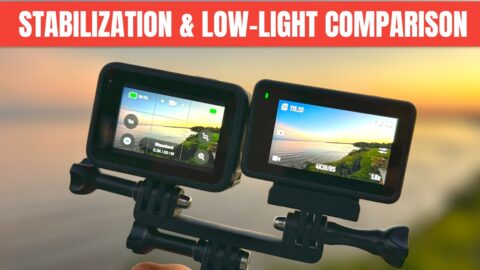
Stabilization: HyperSmooth 6.0 is a highlight, producing gimbal-like smoothness during intense activities like mountain biking or jet skiing. Even with the camera chest-mounted or attached to a bike frame, footage remained steady, with minimal cropping compared to competitors like the DJI Osmo Action 5 Pro. However, stabilization struggles in low light, where slight shakiness becomes noticeable.
Battery Life: The 1,900mAh Enduro battery delivered consistent performance, averaging 1.6–1.8 hours at 4K/30fps and 2.3–2.5 hours at 1080p/30fps in moderate conditions (20–25°C). In cold weather (-10°C), battery life dropped to around 1.4 hours at 4K/30fps, but it outperformed older GoPro models. The Contacto door allowed charging during timelapses without sacrificing waterproofing, a boon for long shoots. However, the battery isn’t backward-compatible with older models, and spares are pricey at $24.99 each.
Audio with DJI Mics: Pairing with the DJI Mic 2 (via Media Mod and 3.5mm port) produced crisp, professional audio for interviews and narrated vlogs, though the setup is bulky. The Mic Mini, connected via Bluetooth to the camera or a smartphone, was ideal for lightweight vlogging, offering clear sound with minimal setup. However, Bluetooth mode on the Mic Mini dropped to 16kHz, slightly reducing quality compared to the Mic 2’s 48kHz/24-bit output.
Accessories: The HB-Series lenses added significant creative flexibility. The Macro Lens was a favorite for detailed product reviews, while the ND filters enabled smooth motion blur for daytime timelapses. The magnetic mount simplified transitions between chest, helmet, and tripod setups, though it’s less secure in high-vibration scenarios like off-road biking. The GoPro Quik app streamlined editing and GPS overlays, but occasional connectivity issues slowed transfers.
Pros
Versatile Lens Mods: The HB-Series lenses (Macro, Ultra Wide, ND filters) expand creative possibilities, with auto-detection simplifying setup. The Macro Lens is particularly impressive for close-up vlogging and photography.
Robust Stabilization: HyperSmooth 6.0 delivers silky-smooth footage in daylight, rivaling gimbal setups, ideal for action-packed vlogs or sports.
Improved Battery Life: The 1,900mAh Enduro battery lasts up to 2.5 hours at 1080p/30fps, a 13–26% improvement over the Hero 12, with reliable cold-weather performance.
Magnetic Mounting: The quick-release magnetic latch speeds up setup changes, complementing traditional mounts for flexible rigging.
Wi-Fi 6: 40% faster transfers make it easier to offload footage to smartphones or laptops, streamlining post-production.
Durable Build: Waterproof to 33 feet and drop-resistant, the camera survived six months of rugged use with minimal wear.
Cons
Poor Low-Light Performance: The aging 27MP sensor struggles in dim conditions, producing grainy footage and less effective stabilization compared to competitors like the DJI Osmo Action 5 Pro.
Expensive Accessories: HB-Series lenses ($69.99–$129.99) and the Contacto door ($79.99) significantly increase the total cost, with a fully kitted setup exceeding $800.
Overheating Issues: In low-airflow scenarios (e.g., static indoor shooting at 4K/60fps with HDR), the camera can overheat after 20–30 minutes, requiring HyperSmooth and GPS to be disabled.
No Wireless Mic Support: Lacking native Bluetooth mic connectivity, it requires the bulky Media Mod for external mics like the DJI Mic 2, unlike the seamless integration of DJI’s Osmo cameras.
Battery Incompatibility: The new Enduro battery isn’t compatible with older GoPro models, forcing upgraders to buy new spares.
Touch Control Learning Curve: The small rear touchscreen can be finicky, leading to accidental setting changes, especially during fast-paced shoots.
Comparison to Competitors
Compared to the DJI Osmo Action 5 Pro, the Hero 13 Black lags in low-light performance and battery life (DJI’s 1,950mAh battery lasts up to 2.8 hours at 4K/30fps). However, GoPro’s lens mods and GPS give it a creative edge for vloggers needing varied perspectives or performance data. The Insta360 Ace Pro 2, with its 1,800mAh battery, offers faster charging but shorter recording times (1.3 hours at 4K/30fps), and its larger sensor performs better in low light, but it lacks GoPro’s extensive accessory ecosystem.
Who Is It For?
The GoPro Hero 13 Black is ideal for:
Action Vloggers: Its rugged build, HyperSmooth 6.0, and Ultra Wide Lens make it perfect for capturing immersive POV footage during sports or travel.
Creative Content Creators: The HB-Series lenses, especially the Macro and ND filters, suit vloggers and filmmakers experimenting with close-ups or cinematic effects.
Adventure Enthusiasts: GPS overlays and durable construction cater to bikers, skiers, and divers wanting to track and share performance metrics.
DJI Mic Users: Pairing with the DJI Mic 2 enhances audio for professional vlogs, while the Mic Mini suits lightweight, casual setups.
It’s less suited for:
Low-Light Shooters: Creators filming indoors or at night will find the sensor’s limitations frustrating compared to the DJI Osmo Action 5 Pro.
Budget Creators: The high cost of accessories makes it less accessible for those unwilling to invest beyond the base $399.99.
Wireless Audio Enthusiasts: The lack of native Bluetooth mic support is a drawback for users seeking seamless audio integration.
Verdict
After six months, the GoPro Hero 13 Black proves itself as a highly versatile action camera that excels for daylight vlogging and action content. Its HB-Series lenses, HyperSmooth 6.0, and improved battery life make it a powerful tool for creators seeking creative flexibility and durability. Pairing it with the DJI Mic 2 delivers professional audio for polished vlogs, while the Mic Mini offers a compact alternative for casual shoots. However, its low-light shortcomings, overheating in static scenarios, and costly accessories temper its appeal. Compared to the DJI Osmo Action 5 Pro’s superior battery life and low-light performance, the Hero 13 Black shines for its lens ecosystem and GPS features but falls short in seamless audio integration.
For vloggers and adventurers willing to invest in accessories and primarily shooting in daylight, the Hero 13 Black is a worthy